
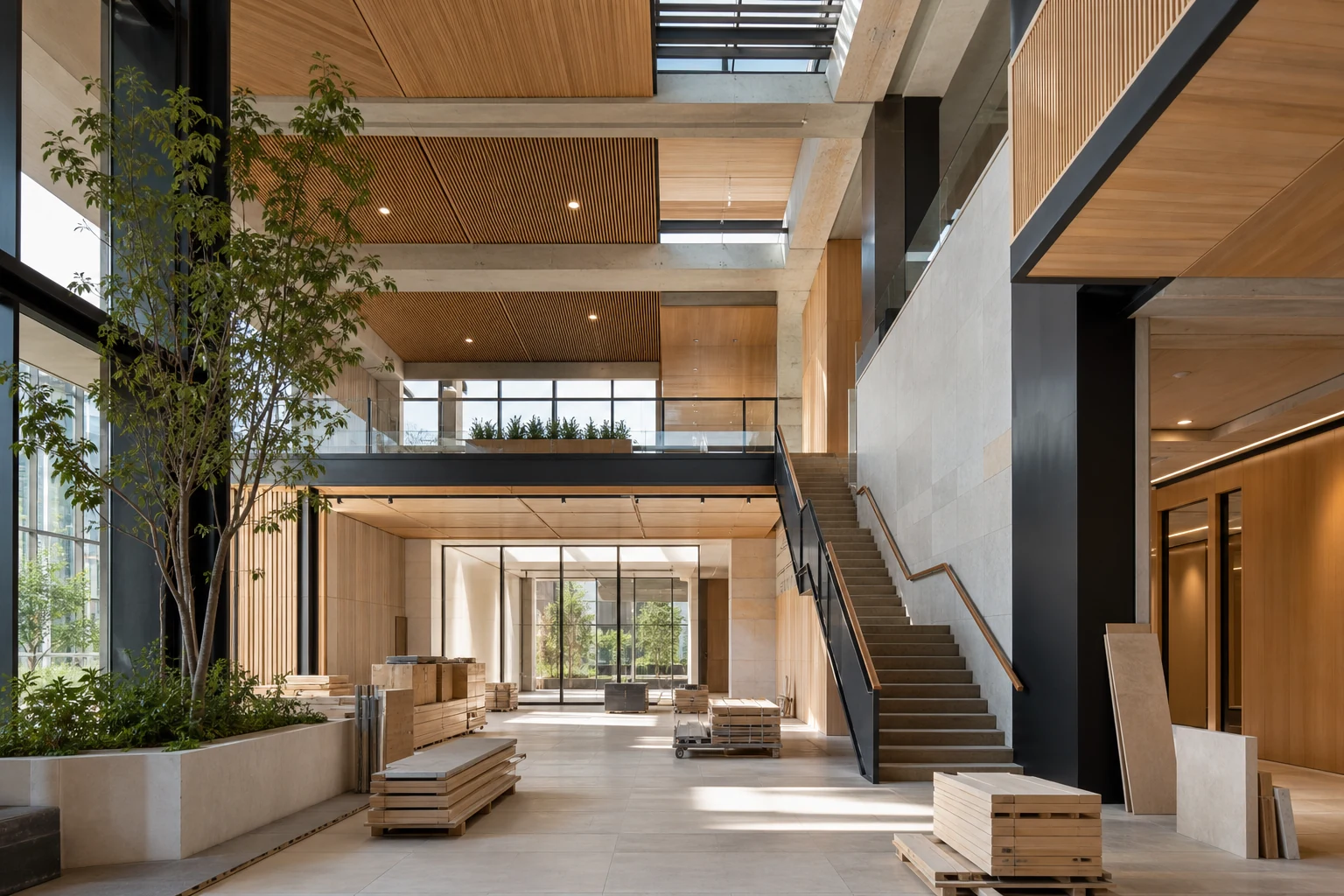
Put future performance in the brief
Projects tend to optimise what the brief makes visible. If adaptability, operational efficiency and user wellbeing are described only as aspirations, they are easily weakened by later trade-offs.
Translate intent into clear project requirements and decision criteria. This gives the team a practical basis for comparing cost, value and whole-of-life impact.
Resolve the high-influence choices early
Orientation, structure, floor depth, servicing strategy and access shape performance long before finishes are selected. These decisions can expand or constrain future use for decades.
Early options work should test how the building performs under more than one plausible scenario. The aim is to understand which choices preserve value before change becomes expensive.
Keep intent connected to delivery
Good project outcomes depend on continuity. Commercial pressure, program changes and technical coordination will test the original strategy as delivery progresses.
A clear governance rhythm allows the team to adjust without losing the reason behind the brief. Resilience is maintained through a series of informed decisions, not a single specification.
Good property thinking makes the decision clearer and the next move more practical.